
Pool Fence Installation in Wilmington and Leland, NC
Code-compliant pool fencing that meets local safety requirements. Aluminum and mesh options with self-closing gates.
About Our Pool Fencing Services
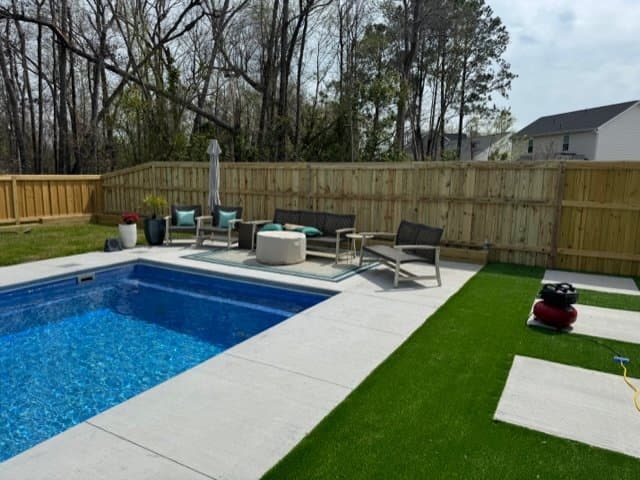
If you have a pool in North Carolina, you need a fence around it. State and local building codes require a barrier that meets specific height, spacing, and gate requirements. This isn't optional, and it's not something you can handle with a few sections of decorative fencing from a hardware store. Pool fencing needs to meet code, pass inspection, and actually keep unsupervised children out of the water.
Davis Fence installs code-compliant pool fencing in aluminum, vinyl, and mesh throughout the Wilmington area. Aluminum is the most popular choice because it provides the required barrier without blocking your view of the pool from the house or patio. We handle everything from material selection to final inspection coordination.
Homeowners with pools in Wrightsville Beach, Carolina Beach, Leland, and Wilmington proper all have the same requirement. The fence needs to be right. Not close. Not mostly compliant. Right. An improperly installed pool fence can create liability exposure, delay your pool permit, and most importantly, fail to protect a child.
Benefits of Pool Fencing
Durability & Longevity
Pool fencing needs to survive constant exposure to pool chemicals, humidity, and sun. Aluminum and vinyl both handle this environment without corroding or degrading. A quality pool fence lasts the lifetime of the pool itself.
Low Maintenance
Aluminum pool fencing needs nothing beyond an occasional rinse. Vinyl is similarly maintenance-free. Mesh pool fencing can be removed seasonally and stored, which extends its lifespan. No material we install for pool enclosures requires painting or staining.
Curb Appeal
Pool fencing doesn't have to be an eyesore. Aluminum pool fence in black or bronze blends into the landscape and lets your pool area remain the visual focus. It's a far cry from the institutional-looking barriers that used to be the only option.
Property Value
A properly fenced pool is a requirement for insurance purposes and a selling point for buyers. Without compliant fencing, a pool can actually decrease property value because it represents a liability. Proper pool fencing converts that liability into an asset.
Privacy & Security
Pool fencing's primary purpose is safety. It prevents unsupervised access by children under five, which is the age group at highest risk of drowning. Self-closing, self-latching gates ensure the enclosure works as intended even when adults forget to close the gate manually.
Weather Resistance
Pool fencing in coastal NC must handle salt air, chlorinated water splash, UV exposure, and storm winds simultaneously. Aluminum handles all of these. Vinyl handles most. We spec materials accordingly based on your property's specific exposure.
Styles & Customization Options
Aluminum is the most specified pool fence material in our market. The standard pool-code design uses vertical pickets without horizontal rails between the top and bottom rail, which eliminates footholds for climbing. Standard height is 4 feet, though 5-foot options are available for additional security.
Black is the most popular color for pool fencing because it's the least visually intrusive. Bronze and white are also available. Flat-top, spear-top, and pressed-point designs offer different aesthetic profiles while all meeting code requirements.
Vinyl pool fencing is available in semi-privacy styles that provide more screening while still meeting barrier code. This is popular for pool areas adjacent to neighboring properties. Full privacy vinyl is occasionally used for pool fencing but requires additional engineering for wind loading.
Removable mesh pool fencing is a code-compliant option for homeowners who want the flexibility to open the pool area when an adult is present. Mesh panels attach to posts with hardware that allows removal in sections. When installed, it meets all NC barrier code requirements. When removed, your pool deck is completely open.
Built for the North Carolina Coast
Pool environments in coastal NC create a uniquely harsh combination: chlorinated water, salt air, intense UV, and high humidity all working on the same fence simultaneously. Cheap materials fail fast in this environment. Aluminum handles it better than anything else because it doesn't corrode from any of these exposures.
Davis Fence installs pool fencing with the same post depth and concrete footing standards we apply to all our coastal work. Pool fences tend to be shorter than privacy fences, but the posts still need to be anchored properly in sandy soil. A pool fence that leans or shifts doesn't just look bad. It creates a code compliance issue that can affect your homeowner's insurance.
We also account for the pool deck itself. Fence posts need to be positioned to avoid underground plumbing, electrical conduit, and pool equipment lines. We coordinate with pool builders when possible and always call for a utility locate before digging.
HOA & Permitting Made Easy
Pool fencing permitting in New Hanover and Brunswick counties involves both fence permits and pool barrier inspections. The fence permit covers the installation itself. The barrier inspection verifies code compliance including gate operation, picket spacing, and height requirements.
North Carolina pool barrier code requires: minimum 48-inch fence height, maximum 4-inch spacing between pickets, no climbable horizontal members between top and bottom rail, self-closing and self-latching gates with latches at least 54 inches high or on the pool side of the gate, and no openings that allow a 4-inch sphere to pass through.
HOA requirements for pool fencing are generally less restrictive than for other fence types because the HOA recognizes the code mandate. Most communities simply require that the pool fence material match or complement other fencing on the property. Davis Fence ensures your installation satisfies both code and HOA requirements.
Frequently Asked Questions
How much does this cost?
Pricing depends on the material, height, footage, terrain, and site conditions of every project, so Davis Fence doesn't quote prices over the phone or online. Every job gets a free, no-obligation, on-site estimate with exact pricing tailored to your property. Call 910-821-1104 or request an estimate through the website to get started.
How long does pool fence installation take?
Most pool fence installations are completed in one day. The pool area perimeter is usually smaller than a full yard, so the footage is manageable. If the project requires coordination with pool construction or concrete deck curing, scheduling may extend the timeline.
Do I need a permit for pool fencing in New Hanover County?
Yes. Pool fencing in New Hanover County requires both a fence permit and a pool barrier inspection. The inspection verifies that the fence meets NC building code requirements for pool enclosures. Davis Fence coordinates both the permit and the inspection.
Why Choose Davis Fence for Pool Fencing
Pool fencing is not a project where you want to learn from mistakes. It either meets code or it doesn't. It either protects children or it doesn't. Davis Fence installs pool fencing that passes inspection the first time because we know the code requirements and build to them precisely.
Matt Davis has installed pool fencing for residential and commercial properties throughout the Cape Fear region. We work with pool builders, general contractors, and homeowners directly. Whether you're fencing a new pool during construction or adding a barrier to an existing pool, we handle the full scope.
Free estimates include a site assessment of your pool area, material recommendations, and a walkthrough of the code requirements. Call 910-821-1104.
Get a Free Pool Fencing Estimate
Ready for a new pool fencing project? Contact Davis Fence today for a free on-site estimate in Wilmington, Leland, or anywhere in the Cape Fear region.